
In this article 7 topics
- What does Israeli law require, and what does it not?
- What is done internationally, and why does it work?
- The three-layer model: what to require in the file
- The retrieval test: how to know the file works, before you sign
- Common mistakes: why they happen, and what they cost
- What to write in the construction contract: wording you can copy
- How we do it
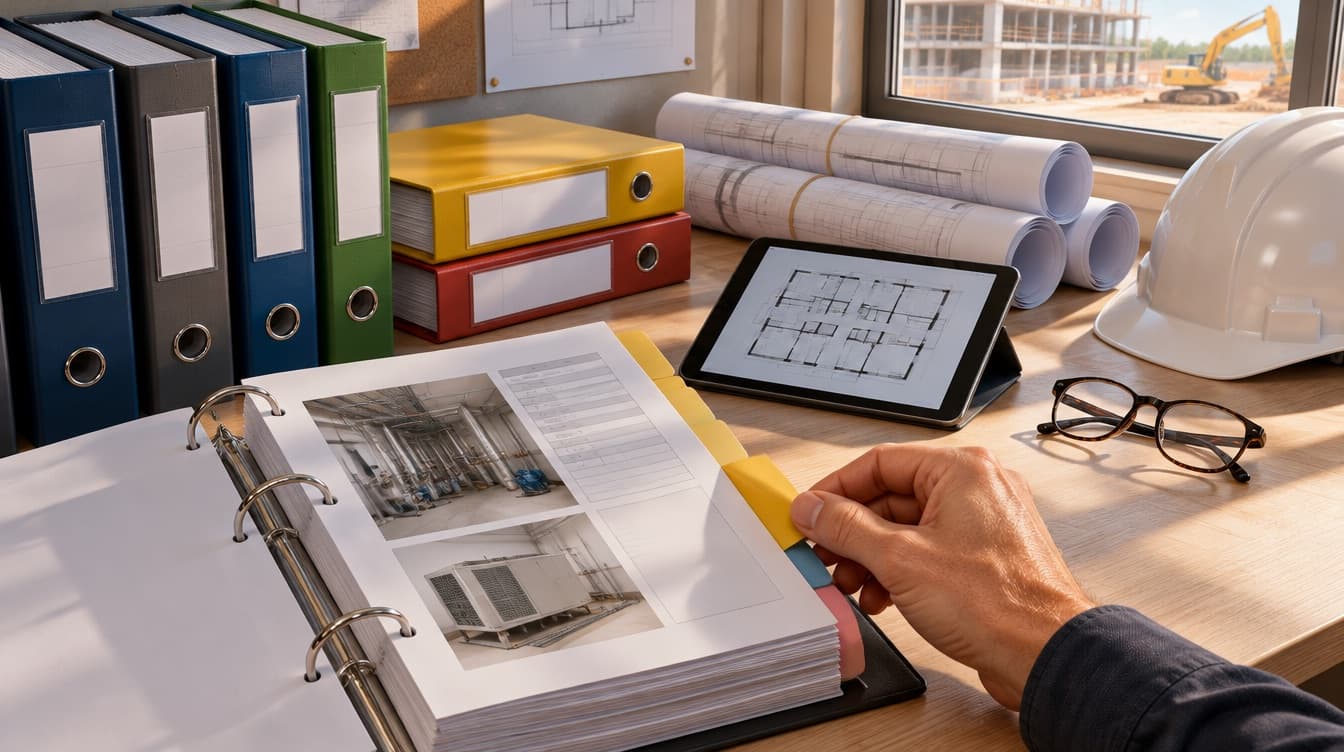
The Tik Mitkan (the facility file) and the maintenance file are the information that makes it possible to operate, repair and maintain the building after the contractor leaves. Israeli law requires only a small part of this: maintenance and use instructions for buyers, and as-built drawings for the completion certificate. Everything else, from the equipment list to the passwords, exists only if it is written into the contract. The right question on handover day is not "did we get a binder?" but "can a technician who does not know the building use it to find, isolate and repair?"
What does Israeli law require, and what does it not?
The Sale Law (Apartments) requires the seller to attach to the sale contract a specification and maintenance and use instructions signed by the seller. Details not known at signing are delivered when the apartment is made available to the buyer. The definition also covers the common property and its installations, and "apartment" in the law includes a unit used for business, so the obligation also applies to the sale of offices and retail space.
A seller who has not delivered maintenance and use instructions has not fulfilled its obligations, and the law treats this as a non-conformity. Note that the law deals with the relationship between seller and buyer. A developer who holds the property and leases it out is itself the receiving party, and its only protection is its contract with the contractor.
The Planning and Building Regulations (Building Licensing) provide, in regulation 95, that an application for a completion certificate must include, among other things, an as-built survey map, a set of as-built drawings and the approval of the inspection body (the licensed body that supervises construction). In other words, the as-built drawings are prepared anyway. The question is whether they will reach you complete and in files you can work with.
A third document that must be in the file is the operating matrix of the fire safety systems. Under Fire and Rescue Commissioner Directive 536, the approved operating matrix is part of the building's fire safety plan, accompanies it and serves as the reference document for periodic inspections. Without the approved copy, every periodic inspection starts from a guess.
What the law does not specify: an equipment list, manufacturers' warranty certificates, software backups, passwords and training. In public tenders in Israel it is common practice to make final handover conditional on a complete facility file and on training the maintenance team. In a private project, this happens only if it is written down. For a question about a specific contract, consult a lawyer.
What is done internationally, and why does it work?
In the UK, the CDM Regulations 2015 require the principal designer to prepare a health and safety file before construction, update it throughout the project and hand it to the client at the end. Designers who could not eliminate a risk in the design must record it in the file. The lesson: the file is built up throughout the project by a named party, not gathered together in the last month.
For higher-risk buildings, the UK Building Safety Act established the "golden thread": a single, up-to-date digital record of safety information. It applies to buildings at least 7 storeys or 18 meters high with two or more residential units. According to UK government guidance, the recipient confirms that it has received the information and that it is in a usable format. The test belongs to the user, not to whoever hands it over.
The United States offers two more ideas. The first is COBie, an open spreadsheet format for equipment data, which the federal General Services Administration (GSA) has required in its construction projects since 2017. The second is ASHRAE's "systems manual", organized by system rather than by supplier. It includes the design intent, the sequence of operations, test results and training, not just catalogs.
The three-layer model: what to require in the file
Layer 1: asset data
- An equipment list in a spreadsheet: tag number, system, location, manufacturer, model, serial number, installation date and warranty start date.
- The tag number in the spreadsheet matches the label on the equipment and the marking on the drawing.
- A list of recommended spare parts, and who holds them in Israel.
Layer 2: how the system works
- As-built drawings in editable CAD files, not just scans.
- The design conditions, set points and sequence of operations for each system.
- Testing, adjusting and balancing reports, commissioning results and the approved operating matrix.
- Backups of controller programming, administrator passwords and software licenses in the owner's name.
Layer 3: what to do with it
- Preventive maintenance tasks and frequencies, according to the manufacturer.
- The periodic inspections required by law, and who is authorized to carry them out.
- The warranty terms, including what voids them.
- Service contacts, and recordings of the training sessions.
The retrieval test: how to know the file works, before you sign
Give the file to whoever will operate the building, and ask them to solve five scenarios using the file alone:
- A leak from the ceiling on an office floor. Which valve do you close, where is it, and does the number on it match the drawing?
- A booster pump is out of service. What is the model, who services it, and is it still under warranty?
- A tenant asks to extend air conditioning hours. Is there administrator access to the controls, and documentation of the current settings?
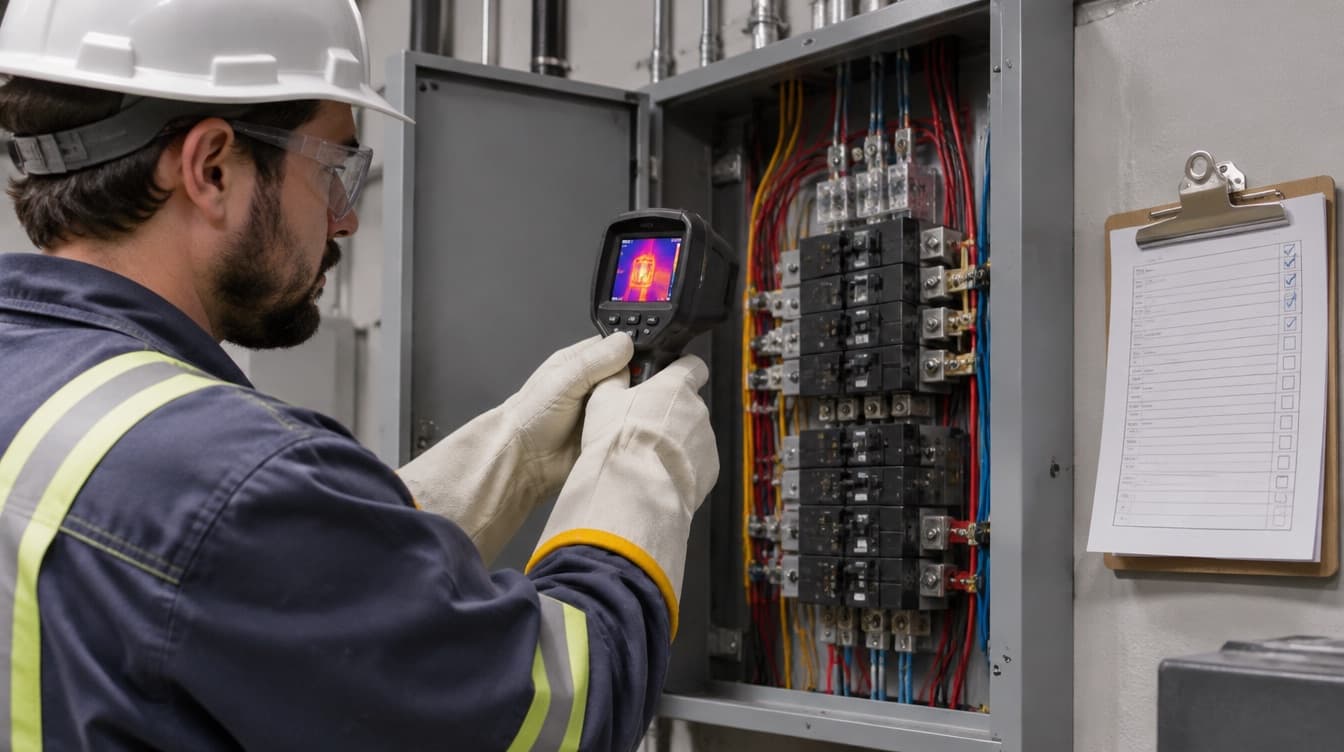
- A periodic inspection of the fire systems is due. Are the approved operating matrix and the approvals available?
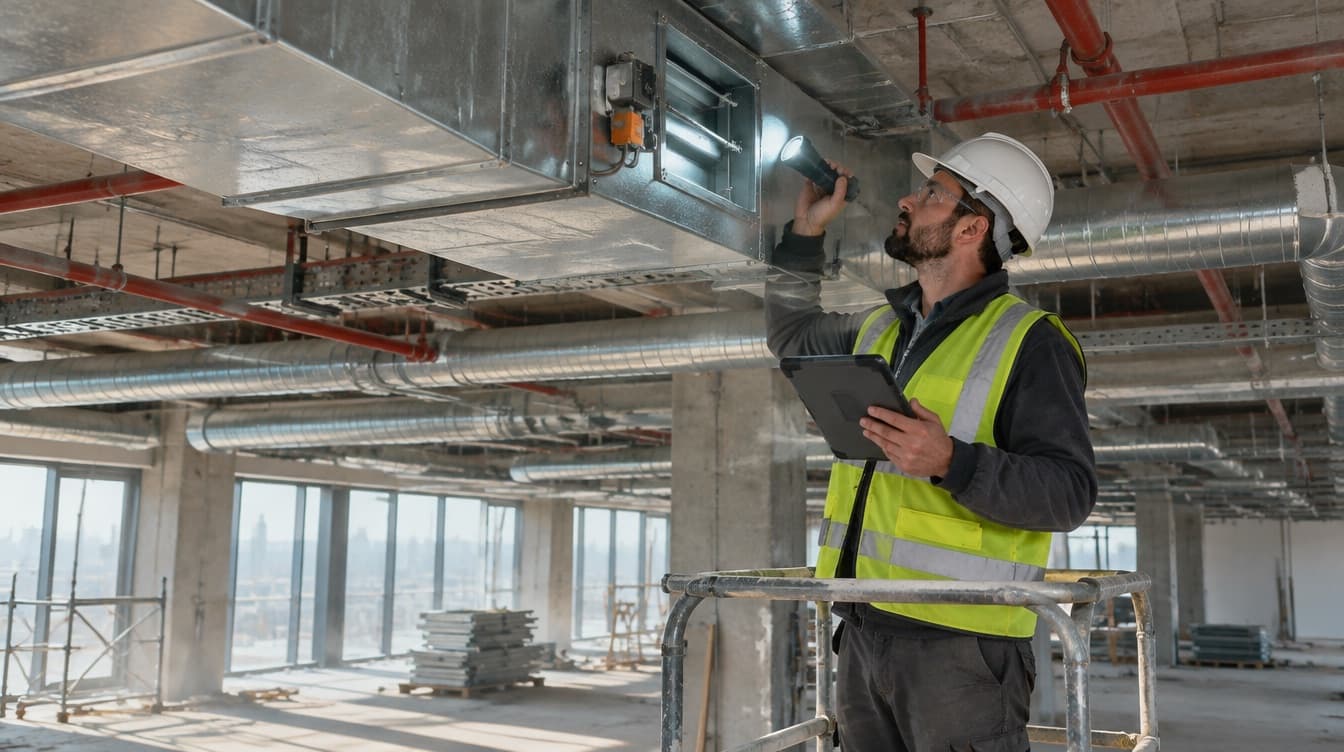
- A rooftop unit needs to be replaced. Is there a drawing with dimensions, lifting data and a removal route?
Each scenario gets one of three scores: found immediately, found after searching, or not found. Every "not found" goes on the handover snag list, with an owner and a date.
Common mistakes: why they happen, and what they cost
- The file is gathered together at the end. No one was appointed to own it, and the subcontractors have already left. The result: information on concealed piping and warranty dates simply does not exist.
- "As-built drawings" that are really tender drawings. Updating them costs designer hours, and no one checks. When a fault occurs, the wrong ceiling gets opened.
- A warranty that starts at installation. That is what the supplier's standard terms say. Equipment installed early comes off warranty shortly after occupancy, and the first year's faults pass to the owner.
- Closed control systems. The integrator keeps the passwords to secure the service work for itself. Every change of hours or alarm settings requires the integrator, at its price and on its schedule.
- The file is handed to the developer, not to the operator. For the project manager, handover is a legal event. The file stays in the archive, and the maintenance team starts from zero.
- Scans only. They are the easiest thing to produce. But a scan cannot be imported into a maintenance management system, and typing it in by hand creates errors.
What to write in the construction contract: wording you can copy
- "The contractor will deliver a facility file and a maintenance file according to the table of contents in the appendix, in Hebrew, in open digital files."
- "The equipment list will be delivered in a spreadsheet using the client's template, and the tag number of each item will match the labeling on site and on the drawings."
- "A draft of the file will be submitted for review before commissioning begins. Final handover is conditional on written approval of the file by the operating party."
- "The warranty period for all equipment will start on the date the client accepts the system, not on the date of supply or installation."
- "Administrator passwords, programming backups and software licenses will be delivered in the owner's name."
- "Every training session will be recorded and attached to the file, with a list of participants."
- "Part of the payment or of the guarantee will be released only after the file has been approved."
And one question for your next coordination meeting: who at the contractor is responsible for the file, and when will we see a first draft?
How we do it
We build the facility file and the maintenance file during construction, rather than waiting for handover day. At the same time, we review system suppliers from a maintenance perspective: warranty, spare parts and local service. And when we also manage the building after occupancy, the file is written for the people who will actually use it.
Is your building still under construction, with time to put these requirements into the contracts? Read about consulting during construction and about why management needs to start before Form 4 (the occupancy permit). On the inspections the law requires after occupancy, see periodic building inspections.