
In this article 6 topics
Every building has a list of periodic inspections: elevators, fire protection systems, electricity, the generator, gas and more. The problem is that much of the information online presents recommendations as if they were legal requirements, and quotes frequencies with no source. In this article we separate three things: what the law requires with a clear frequency, where there is a general duty without a set frequency, and what is a recommended schedule. Every item comes with its source.
Inspections the law requires, with a clear frequency
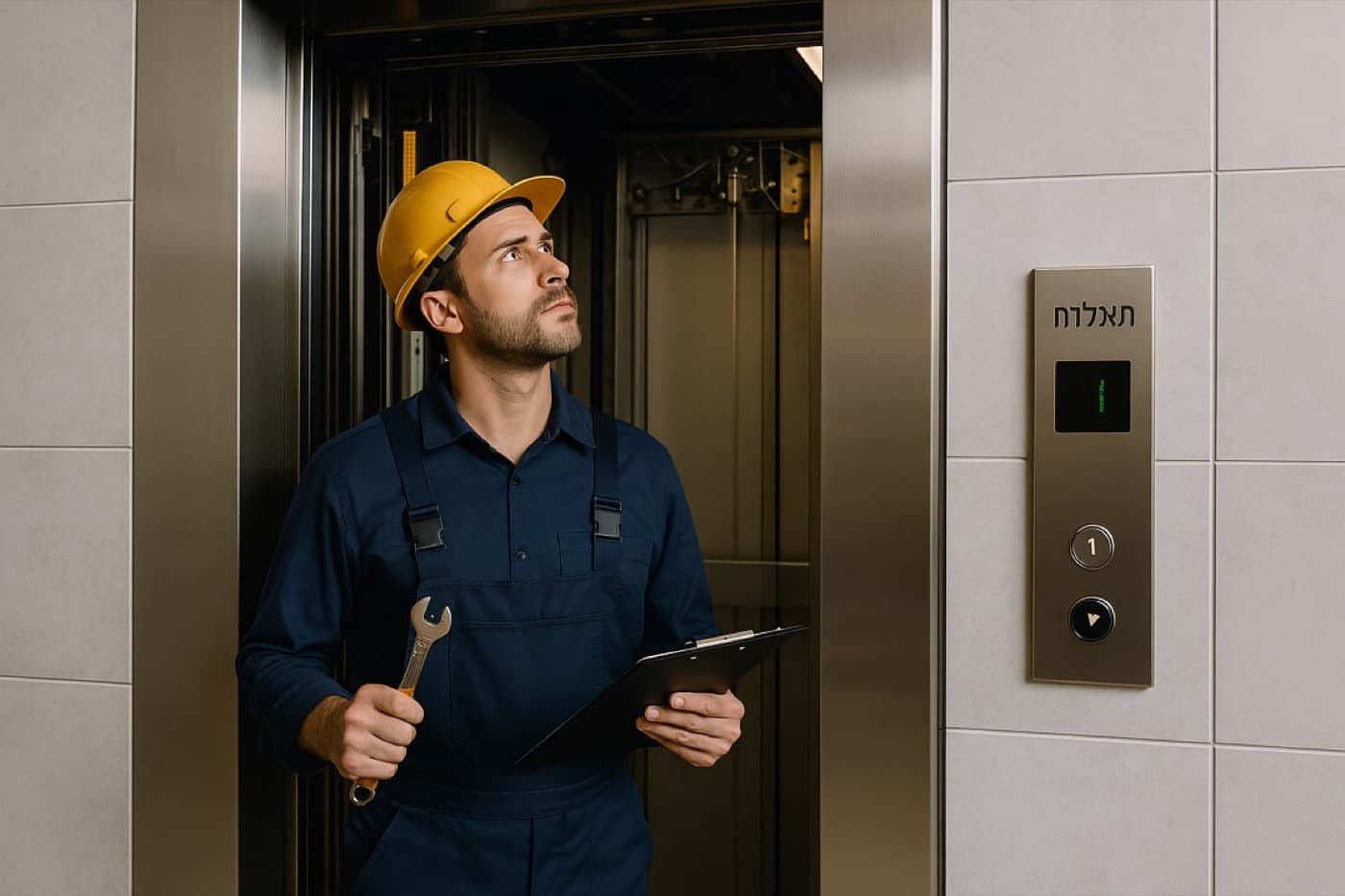
- Elevators: an inspection by a certified elevator inspector at least once every six months. The inspector sends a report to the owners and to the Ministry of Labor, and the owners order the inspection, pay for it and fix the defects. The details are in our article Elevator Law and Standards.
- The public electrical installation in a high-rise building: a functional inspection at least once a year, including the generator and the transfer switch. The report goes to the owners, and defects are fixed without delay. The duty is on the owner or the occupier of the installation.
- Gas installations (LPG), including a central gas system: a periodic inspection at least once every five years. Here the duty is on the gas supplier, and the consumer must allow the inspection.
- Fire extinguishers: under the official standard for extinguishers (SI 129 Part 1) there is routine checking, an inspection by a licensed extinguisher inspector, and maintenance whose frequency depends on the type of extinguisher. The responsibility is on the property owner or occupier.
- Playground equipment, if there is any: under SI 1498, a visual check at least once a month and a main inspection at least once a year by a specially trained professional.
A general duty, without a set frequency
- Fire safety systems: the National Fire and Rescue Authority Law requires all safety arrangements to be kept in working order. Under section 40(a) of the law, whoever maintains the common areas is also considered an "occupier" of those areas, so the responsibility can fall on the management company and not only on the owners.
- Fire equipment in residential buildings: in a residential building of at least four floors, the hydrants, hoses, hose reel and extinguishers must be in working order at all times. The regulations do not set how often they are checked.
- A shared shelter: must be usable at all times, clean and clear. The local authority may enter, inspect and demand repairs. There is no fixed periodic inspector.
- Sprinklers and fire detection: the frequencies are set in the maintenance standards (SI 1928 for sprinklers, SI 1220 Part 11 for fire detection), not in a regulation that sets dates.
Tall and high-rise buildings: the Fire and Rescue Authority schedule
The "monthly, semi-annual, annual, biennial" table found on many websites originates in the 2018 regulations on maintaining fire safety arrangements in tall and high-rise buildings. In 2019 the Israel Fire and Rescue Authority published the same intervals as "recommended actions" until regulations are enacted. For tall buildings (over 13 meters) and high-rise buildings (over 29 meters), in short:
- A monthly visual check in high-rise buildings, including fire doors.
- A test of the public address system and emergency lighting every six months.
- Fire detection, sprinklers and extinguishers once a year.
- The firefighters' panel, smoke control, pressurization and the generator every two years.
- Fixing a defect within 14 working days, and a safety file kept for seven years.
Whether this schedule is treated as an obligation or a recommendation, when an incident happens the first question will be whether the building was maintained. That is why we treat it as the minimum. In a tall building, it is worth checking the current status with the Fire and Rescue Authority or a lawyer.
What circulates online without a binding source we could find
- An electrical inspection every five or ten years in an ordinary residential or office building: these numbers come from a 2020 professional committee table, not from a regulation. There is an explicit duty in high-rise buildings (once a year) and in businesses that require a license.
- Cleaning rooftop water tanks once a year: we did not find a regulation that sets periodic cleaning and disinfection for a tank in a residential building. It is still good practice.
- Calibrating carbon monoxide detectors in a parking garage: we did not find a national requirement. Some municipalities, such as Tel Aviv, require annual calibration and a certificate as part of business licensing.
How it is managed in practice
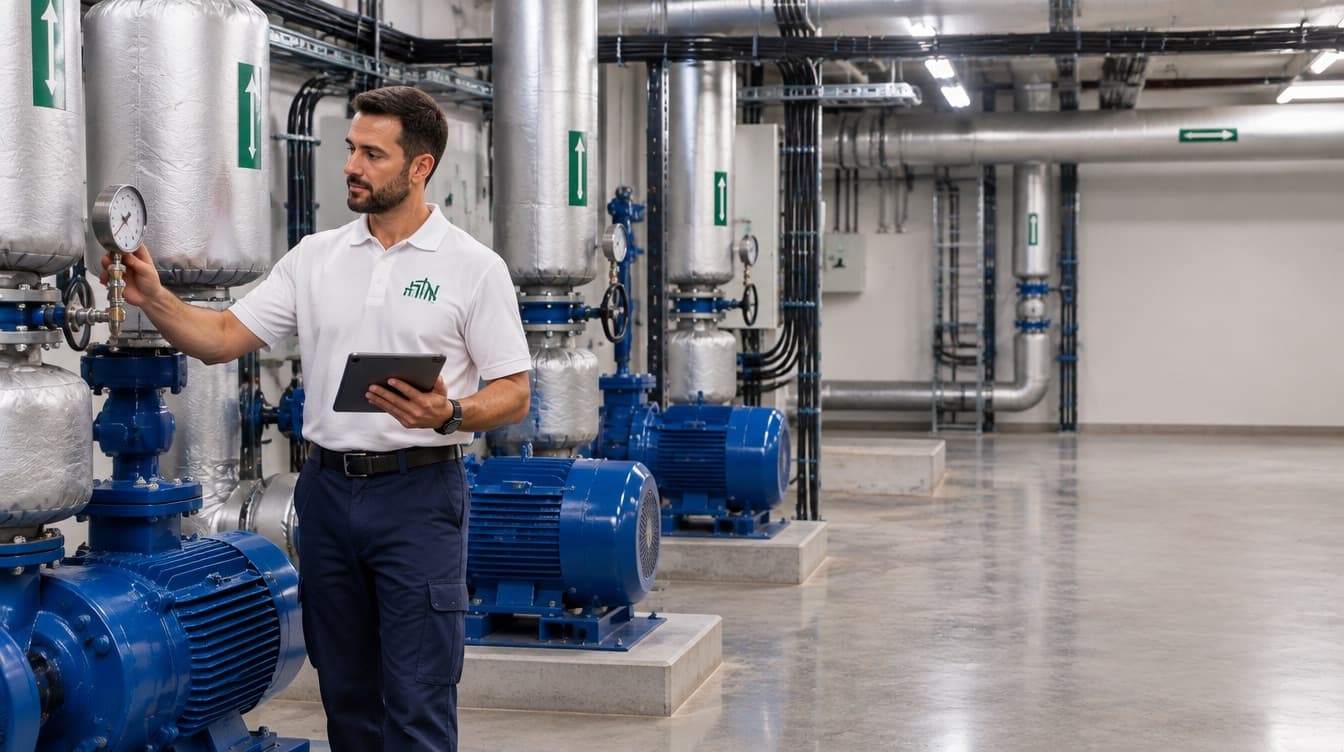
In a building with dozens of systems, the problem is not knowing what is needed, it is not missing anything. In the building maintenance we manage, every system is recorded with its next due date, according to the strictest of the law, the standard and the recommendation. Every inspection is opened as a task with an owner and a date, and the certificate or report is kept in the building file. So when an inspector, an insurer or an authority arrives, everything is in one place.
Sources
- Safety at Work Ordinance [New Version], 1970, sections 58 to 70 (elevators).
- Electricity Regulations (Public Electrical Installation in a High-Rise Building), 2003, regulations 18 and 19.
- Liquefied Petroleum Gas Law, 2020, section 25.
- National Fire and Rescue Authority Law, 2012, sections 40 and 41.
- Fire Services Regulations (Fire Equipment in Residential Buildings), 1972.
- Civil Defense Law, 1951, sections 14 and 14A (shelters).
- Israel Fire and Rescue Authority, Maintenance of Fire Safety Arrangements in Tall and High-Rise Buildings, June 2019.
- Standards: SI 129 Part 1, SI 1928, SI 1220 Part 11, SI 1498.
The information in this article is general and is not legal advice. Requirements may vary by building type, business licensing and local authority.