

In this article 8 topics
- What does the law say about the relationship between you and the contractor?
- The gap most developers discover too late
- What the world has learned about "completion"
- The three gates method
- A defect classification matrix
- Common mistakes: why they happen, and what they cost
- What to write in the contract and the protocol: wording to copy
- How we do it
Taking over a building from the contractor is a legal and financial event, not just a walk-through. On that day the risk passes to you, time limits start running, and the way opens to releasing payments and guarantees. That is why you accept the building system by system, against completion conditions agreed in advance, with a classified defects list and money held back against whatever is still open. A visible defect that is not recorded today will be hard to claim tomorrow, and in a building sold as units you will have to answer for it to the buyers.
What does the law say about the relationship between you and the contractor?
The relationship between a client and a contractor is governed by Israel's Contract for Work Law (Chok Chozeh Kablanut). Under section 3, the client must notify the contractor of a defect within a reasonable time from discovering it, or from when it should have discovered it. If the defect can be repaired, the contractor must be given a fair opportunity to repair it. A client that did not give notice as required cannot rely on the defect, unless the contractor knew about it.
In practice, the acceptance walk is exactly the moment at which a visible defect becomes one you "should have discovered". Section 6 adds that the client must accept the work on the agreed date, or within a reasonable time of the contractor's notice that it is complete. You cannot postpone acceptance indefinitely, so the right tool is acceptance with written reservations.
The law applies as long as the contract has not set otherwise. In other words, the construction contract determines almost everything: what counts as completion, the contractor's inspection period and how much money is held back. Before signing an acceptance protocol, have the project's lawyer review it.
The gap most developers discover too late
Under the Sale Law (Apartments), the inspection period toward the buyer starts when the apartment is made available to them. A unit that is sold and handed over months after you took over the building only starts its inspection period then. If the contractor's inspection period toward you is measured from the day of acceptance, the last part of the exposure to buyers may be left with you alone.
The solution is contractual: align the inspection and liability periods in the construction contract, and in the contracts with system suppliers, with the periods you owe the buyers. And in an income-producing property that stays in your ownership, liability toward tenants is set in the leases, so it is worth checking that it is not broader than what you received from the contractor.
What the world has learned about "completion"
In the UK, "practical completion" is barely defined in the standard contracts. In 2019 the Court of Appeal summed up that at completion the building must be free of visible defects, other than trivial ones. An article in the RICS journal (RICS is the British professional body of surveyors and valuers) lists what completion triggers: release of part of the retained money, possession of the building, the start of the defects period, transfer of the risk of damage and changes to insurance.
The UK's NEC contracts go a step further. Completion is defined as doing everything the requirements document says must be done by the completion date, and correcting the defects that prevent use. The recommendation to clients is to list in the requirements document everything needed before completion, including documentation and training.
In the United States, the "substantial completion" certificate of the American Institute of Architects is signed with a defects list attached and a date for completing it. It can apply to a defined part of the project. The commissioning guide of the federal GSA (General Services Administration) notes that it may be necessary to hold back money also against tests deferred to another season, because the contractor will have to return to the site after finishing.
The shared lesson: three things are defined in the contract in advance. What counts as completion, what may be left open, and how much money stays held back against what is open.
The three gates method
Gate 1: before the walk
Do not start an acceptance walk for a system without the material that proves it is ready:
- An electrical inspector's approval, a certified examiner's report for each elevator and approval of the activation sequence of the fire systems.
- The system's signed commissioning results, and the list of defects from commissioning.
- A draft of the system's Tik Mitkan (the facility file), including as-built drawings.
Gate 2: the walk itself
- Every walk includes a representative authorized to decide on your behalf, the supervisor, the system consultant, whoever will operate the building, and representatives of the contractor and the subcontractor.
- Every system is actually operated in front of the participants. "Ready for operation" is not "tested and working".
- Also check access, labeling and isolation: can you close a valve, remove a pump and disconnect a panel without shutting down the whole building?
Gate 3: closing
- A classified defects list, with an owner and a date for each item.
- A follow-up walk scheduled in advance, not "when it's ready".
- A protocol stating that acceptance is subject to the attached list.
A defect classification matrix
- Grade A, safety or prevents use: a failed fire activation sequence, a generator that does not kick in, an elevator without an examiner's report. The system is not accepted.
- Grade B, affects operation or warranty: a standby pump that does not kick in, a missing access panel, unlabeled valves, missing documentation. Acceptance with reservations, with money held back and a date.
- Grade C, finishes: scratches, paint, door alignment. Recorded with a date, and does not hold up acceptance.
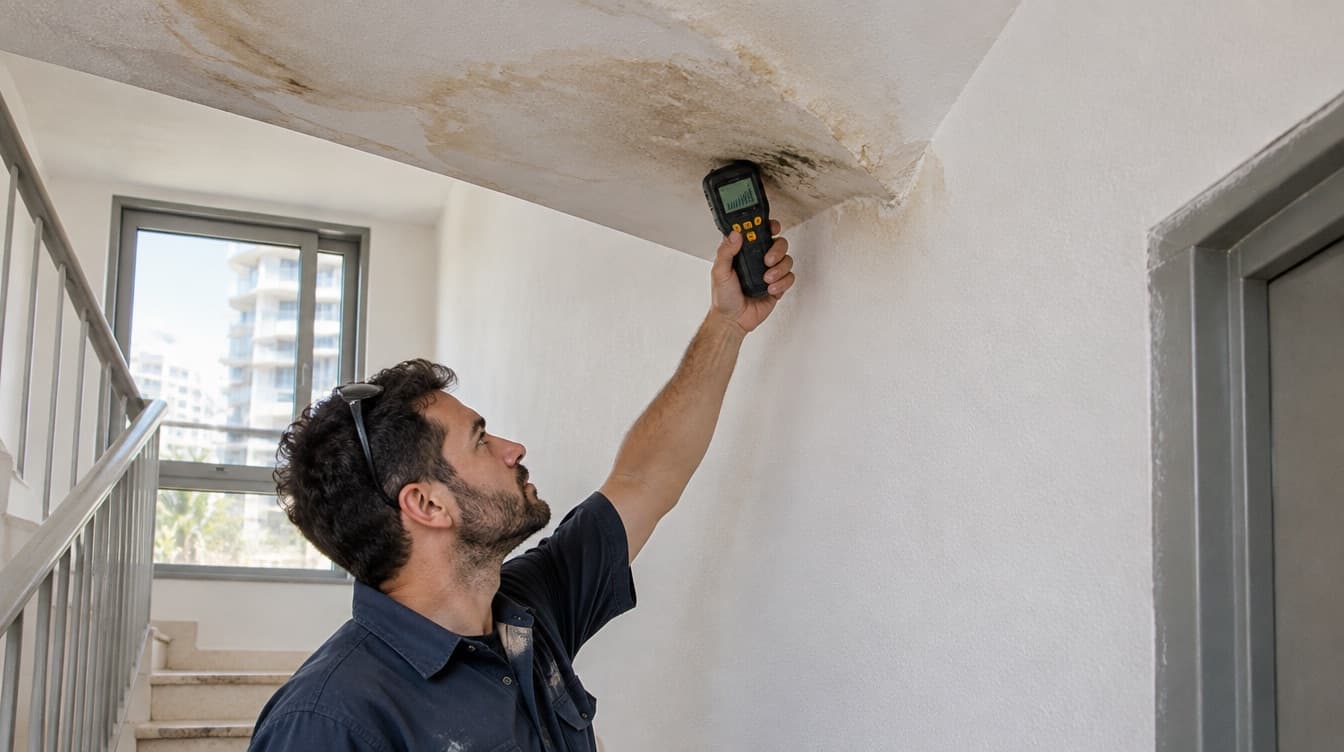
Every defect has a number, location, system, grade, photo, owner and date. A defect is closed only after a re-inspection and an "after" photo, not on the strength of a notice from the contractor.
Common mistakes: why they happen, and what they cost
- Signing "without reservations" under pressure of the handover date to buyers. The date in the sale contracts looks more urgent than any defect. The result: you lose leverage over the contractor, and are left to repair things on your own in front of the buyers.
- Checking finishes, not systems. Finishes are visible, and they are what buyers complain about first. A standby pump that does not kick in is discovered only at the first fault, when the contractor is already on another site.
- Whoever will operate the building was not invited. Sometimes they have not been chosen yet. Then they inherit compromises nobody explained to them, with nothing to rely on.
- A defects list kept in WhatsApp and emails. It is fast in the field. But when a dispute arrives, there is no proof of when you gave notice, and that is exactly the test in the law.
- The list is sent by someone without authority under the contract. The RICS article warns about this explicitly. The contractor treats the list as a recommendation, and the dates are not enforced.
- Releasing guarantees before Grades A and B are closed. It looks like a gesture to the contractor as the project wraps up. After the release, all you have left is the letter.
What to write in the contract and the protocol: wording to copy
- "Completion will be deemed achieved only after all systems have undergone documented commissioning, the inspectors' approvals have been received, and the Tik Mitkan has been approved by the operating party."
- "Acceptance will be carried out by systems or parts. The inspection and liability period of each system will begin on the date of its acceptance."
- "The contractor's inspection and liability periods will not be shorter than the periods the client owes to buyers and tenants."
- "The defects list will be delivered in writing by the client's supervisor, and will form an integral part of the acceptance protocol."
- "Until the reservations are removed, the contractor will continue to maintain the systems under reservation at its own expense." Wording like this is common in public tenders in Israel.
- "A retained amount will be held against Grade B defects and seasonal tests, and will be released only after they are closed."
And three questions for the next meeting with the contractor: When will we receive the draft files for each system? Who on the contractor's side is authorized to sign the defects list? And when is the follow-up walk scheduled?
How we do it
We take part in the building handover as the ones who will manage it afterward, and check every system from the angle of whoever will operate it for years. When we also manage after occupancy, the knowledge from the handover is not lost. We manage warranty defects in a dedicated module, with a status for each defect and before and after photos.
Approaching handover? Read about pre-construction consulting and about why management needs to start before Form 4 (the occupancy permit). And for what happens in the first year with the contractor, see the warranty year in a new building.