
In this article 9 topics
- What is mandatory in Israel?
- How is it done around the world?
- Five levels of testing: a working model
- What does functional testing check?
- What does a good test form look like?
- Seasonal commissioning: the Israeli problem
- Common mistakes: why they happen, and what they cost
- What to write in the contracts: wording to copy
- How we do it
Commissioning building systems before occupancy is a documented process that proves every system in the building works as required, in every operating mode, on its own and together with the other systems. It is different from installation and different from regulatory approval: a system can be installed, connected and approved, and still not work properly. In Israel the explicit requirement focuses mainly on the fire systems and the certified inspectors, and everything else depends on the contract. A developer who skips full commissioning discovers the gaps after the tenants or buyers have already moved in, when every repair disrupts people.
What is mandatory in Israel?
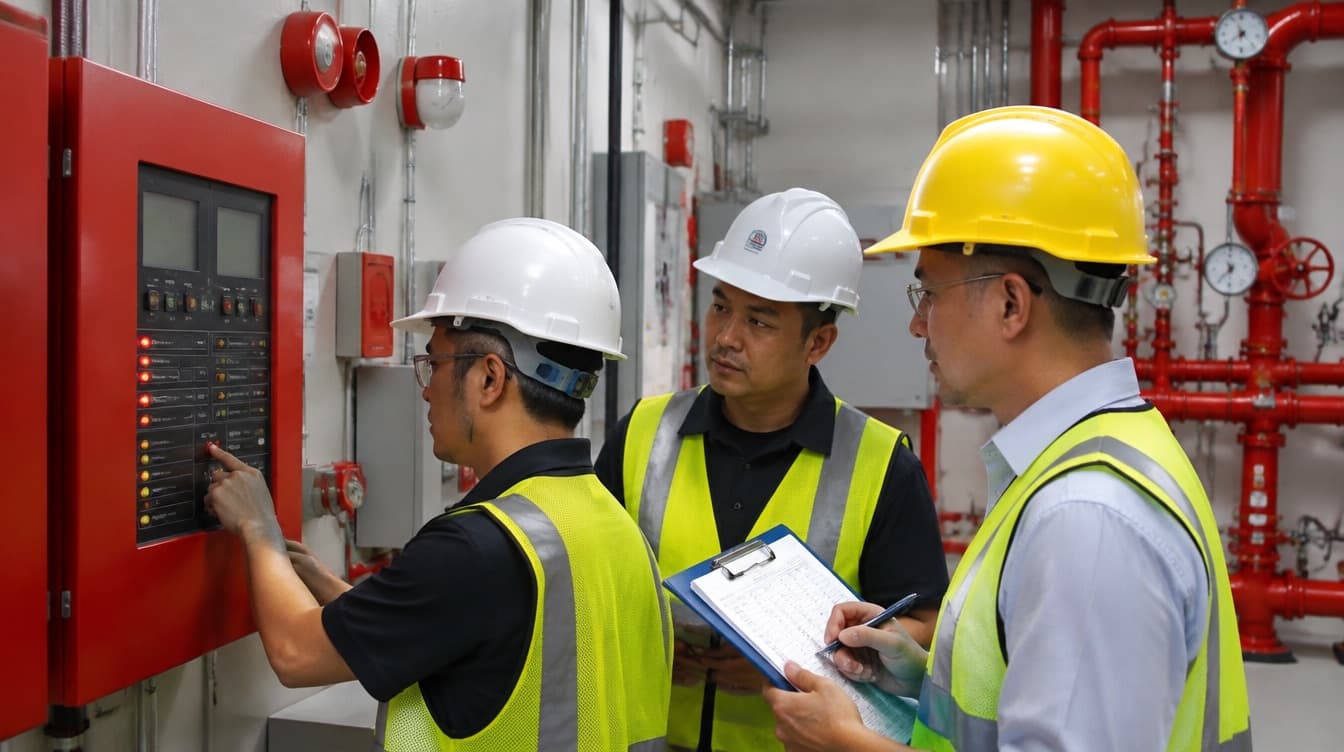
The most detailed requirement is Fire and Rescue Commissioner Directive 536, which deals with the activation sequence of the fire safety systems. This is the order in which detectors, smoke fans, doors, fire shutters and elevators work together during an event. Under the directive, responsibility for designing the activation sequence lies with the designer, in consultation with the fire authority.
The test is carried out by the Standards Institution of Israel or by a laboratory accredited for Israeli Standard SI 1220 Part 3, and it includes disconnecting the permanent power supply to test the generator. A detail many miss: if the test was done on the construction site's temporary power connection, then before occupancy an approval is required from a certified Type 3 electrical inspector on behalf of the contractor. The approval confirms that the permanent connection did not change how the systems operate. It is worth reading the text of the directive before planning the schedule.
Under regulation 95 of the Planning and Building Regulations (Building Licensing), an application for a completion certificate must include, among other things, the approval of the inspection institute (machon bakara, the licensed body that reviews construction), and in buildings where it is required, confirmation of consultation with the fire authority. Elevators are inspected by a certified examiner before they are put into operation. HVAC testing and balancing, point-by-point checks of the controls and seasonal tests are not regulated as a general requirement, so they must be written into the contracts.
How is it done around the world?
The accepted guideline in the United States is ASHRAE Guideline 0, alongside Guideline 1.1, which sets out the technical requirements for HVAC. The principle: commissioning starts in design. The owner writes the Owner's Project Requirements, the designer documents the Basis of Design, and every later test is measured against these two documents. ASHRAE recommends that the commissioning lead be independent, and that any conflict of interest be declared in writing.
The 2020 commissioning guide of the federal GSA (General Services Administration) adds practical rules. The commissioning provider cannot be the executing contractor alone. The cost of a retest, and the delays it causes, fall on the contractor, to encourage it to check before it calls for a test. And staff training is done mostly before completion, not after it.
In the UK, CIBSE Commissioning Code M, updated in 2022, defines the role of the commissioning manager and sets tasks for it as early as the design stages. BSRIA's Soft Landings framework adds a stage after handover: a team on site during the first weeks for fine-tuning, and follow-up for up to three years.
Five levels of testing: a working model
In complex projects it is common to divide commissioning into five levels. No level starts before the previous one has been signed off:
- Factory testing for major equipment, such as the generator, chillers and main electrical panels, before shipping.
- Site acceptance: the equipment that arrived matches what was approved, and was not damaged in transport or storage.
- Installation and first start-up: an installation checklist for each component, followed by HVAC testing and balancing.
- Functional testing of each system in every operating mode: normal, night, weekend, failure of a single component.
- Integrated testing: scenarios that cut across systems. A fire on a floor, a full power outage, a failure of a central pump, loss of communication to the controls.
What does functional testing check?
- HVAC and ventilation: the airflow at every outlet matches the design, and the system responds correctly when switching between modes.
- Building management system: every point on the screen is connected to the right equipment and reports a real value. Alarms reach their recipient, and schedules follow the building's operating hours rather than factory settings.
- Generator: tested under real load, including automatic transfer, start-up of the essential systems and return to the grid.
- Pumps: switchover between duty and standby, level and fault alarms, and operation during a power outage.
- Elevators: fire emergency mode, transfer to the generator and emergency communication from the car.
What does a good test form look like?
According to the GSA guide, every test record includes: test number, date and time, whether it is a first test or a retest, the system and location, the conditions at the time of the test, the expected performance, the actual performance, the defects opened, and the signatures of the person performing it and of the witness. A form without "expected performance" only documents that someone was there.
Every defect is recorded in a single issues log, with an identifier, system, severity and status until closure. This log is also the basis for deferred tests.
Seasonal commissioning: the Israeli problem
A building occupied in winter cannot prove that the chillers hold an August load. A building occupied in summer does not test real heating. The GSA guide requires planning seasonal and deferred tests in advance, writing into the contract that the contractor returns to carry them out, and considering holding back money until they are done.
The GSA also recommends a review of all systems about two months before the end of the warranty year, together with the operations team, to identify what still needs to be repaired at the contractor's expense.
Common mistakes: why they happen, and what they cost
- Commissioning gets squeezed to the end. Every construction delay eats into the time planned for it, because the occupancy date is fixed. The result: only what regulation requires is tested, and the rest is discovered with the tenants.
- The contractor tests itself. It is cheap and convenient for the schedule. But no contractor will diligently find a defect it has to fix at its own expense.
- A fire test on temporary power, without the approval that should follow it. The permanent connection arrives late, and nobody remembers that an additional approval is needed. The result: a delay in occupancy in exactly the most pressured week.
- Controls left on factory settings. Nobody is responsible for the schedules. Systems run around the clock, and the first year's electricity bill looks like a mistake.
- No rule for retests. The contract does not say who pays. Every failure becomes an argument, and the repair is delayed.
- The operations team is not present at commissioning. It has not been recruited yet, or nobody thought to invite it. So the knowledge stays with the subcontractors, who leave.
What to write in the contracts: wording to copy
- "The contractor will carry out commissioning according to an approved commissioning plan, in five levels, and will not move to the next level before the previous one has been signed off."
- "Commissioning will be led by a party independent of the contractor, appointed by the client."
- "The cost of a retest required because of a failure, and the delay it causes, will be borne by the contractor."
- "Seasonal and deferred tests will be listed in the issues log, and the contractor will return to carry them out in the appropriate season."
- "The final control schedules and setpoints will be defined according to the building's operating hours and documented in the Tik Mitkan (the facility file)."
- "The client's operations team will take part in the functional and integrated tests, and training will take place during commissioning."
How we do it
We set up the management operation before occupancy, so our operations team is present at commissioning and learns the systems while the contractors are still on site. When we also manage the building afterward, what was learned in commissioning stays with the building. The findings go straight into the Tik Mitkan and the maintenance file that we build.
Is the building nearing completion? Read about pre-construction consulting and about why management needs to start before Form 4 (the occupancy permit). On maintaining the safety systems after occupancy, see life-saving systems in the building.