
In this article 9 topics
- Setting expectations: the building will be dirtier in the first months
- Elevators: no move starts without protection
- Sprinklers: only through the management company
- Renovations and construction waste
- Fire alarms: expect more than usual
- Parking, EV chargers and pets
- For the committee: what else to plan in the first year
- A sample guidelines sheet for residents
- How we support occupancy
The first months after the occupancy permit (Form 4) are the busiest period in a building's life. Dozens of families move in almost at once, movers and tradespeople cross the lobby every day, and the contractor is still working in the common areas. A building that gets through this period in good order stays in good order afterwards. Here is what we have learned from the occupancy of buildings we manage: tips for the building committee, and a sample guidelines sheet for residents.
Setting expectations: the building will be dirtier in the first months
Tell residents this in advance rather than explaining it later. In the first months many residents leave renovation waste on the floors and in the common areas, and the worker who should be washing floors is busy clearing it. In the first half year the contractor and every apartment's tradespeople pass through the building, and the common areas get much dirtier than usual.
A tip for the committee: do not rush to sign off the contractor's final cleaning. Once you sign, the contractor will not come back to clean, and in the first months the common areas will still get dirty from apartment renovations.
Elevators: no move starts without protection
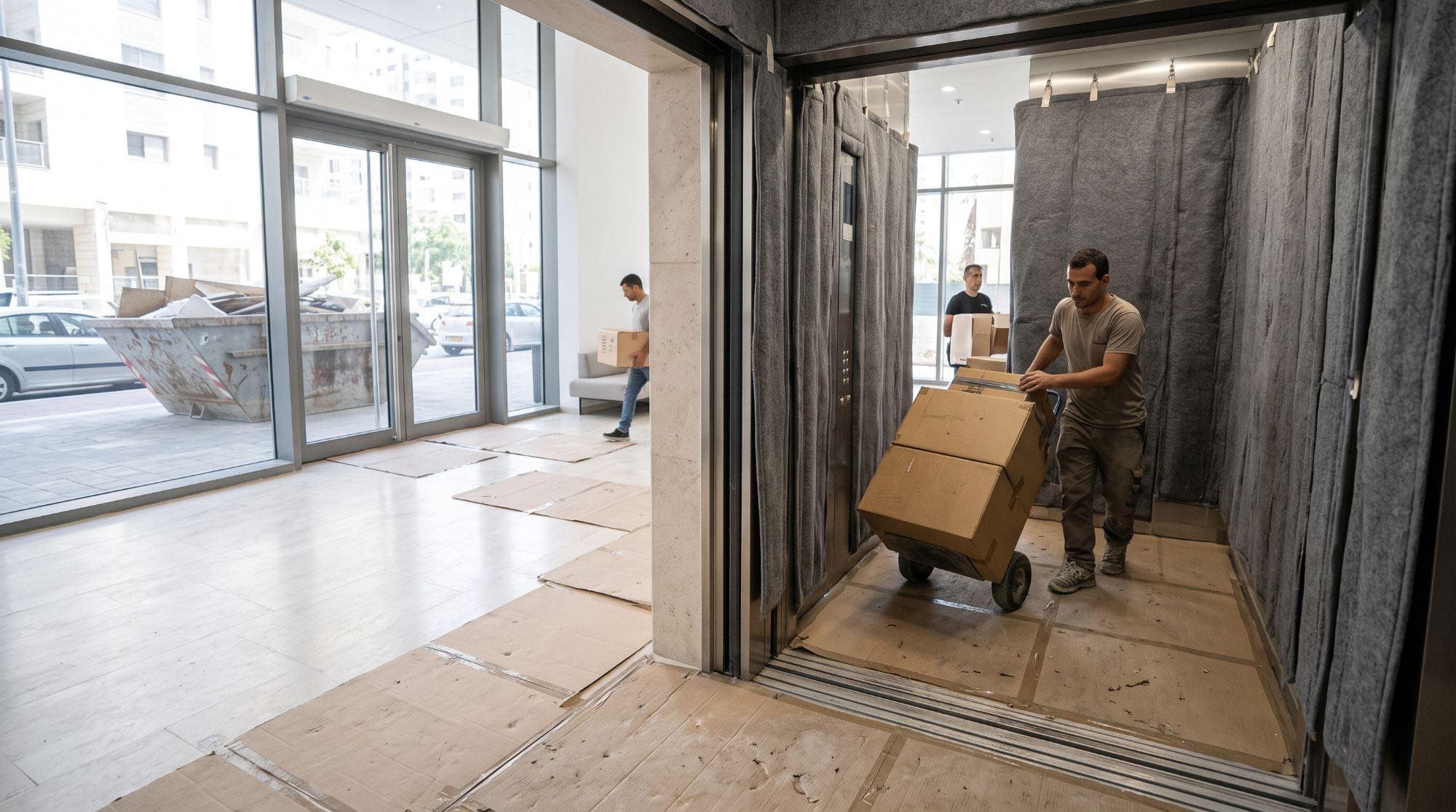
- Every move or renovation starts only after the elevator protection is installed. The resident coordinates with the management company in advance, so the protection is in place on time.
- Moves only in the elevator designated for them, usually the large one.
- Reusable protection bought for the building keeps serving moves and renovations in later years.
- Do not hold the elevator door open, and children under 9 do not ride alone.
Sprinklers: only through the management company
Closing sprinkler system valves and moving a sprinkler inside an apartment are done only by the management company, or a supplier it supervises. Moving a sprinkler means draining the water, removing the head, installing a new one, refilling and testing. One mistake can start the fire pump, flood a floor or leave apartments unprotected. When one supplier does all the sprinkler moves in the building in an orderly schedule, it costs residents less and causes no damage.
Renovations and construction waste
- Every resident who renovates must bring a construction waste container, coordinated with the management company for location and timing.
- Construction waste may not be left on the floors, in the lobby, in the trash room or in the shared container. If the contractor provides a shared container for the first period, use it only for what it was meant for.
- No renovations or changes in the common areas: lobby, corridors, stairwells, facade and roof.
- Noisy work only during the hours the law and the building bylaws allow.
- Residents are responsible for their tradespeople. Damage to the common areas or waste they leave is on the resident, so it is worth accompanying them.
- Do not lean goods against the lobby walls, and movers park only in a legal spot that blocks nobody.
Fire alarms: expect more than usual
Dust, work and tradespeople set off detectors, and during occupancy there are many more alarms than in routine. Residents should know in advance what to do when an alarm sounds, and that a control center is available to handle every event.
Parking, EV chargers and pets
- Every resident, and every supplier on their behalf, parks only in their marked spot.
- Drive slowly in the garage: pedestrians come out of the elevators straight toward the cars.
- EV chargers are installed only in coordination with the management company.
- Do not let pets relieve themselves in the lobby, elevators or stairwells.
For the committee: what else to plan in the first year
- An engineering inspection toward the end of the warranty year, after the building has been through a winter. A common mistake is ordering it at the start, before defects have had time to appear. For every stage with the contractor, see our guide to the building warranty year.
- A lighting report before the warranty ends. Toward the end of the year, collect every faulty light fixture and send the contractor one list.
- First projects: cameras, lobby internet, furniture, pigeon netting, a defibrillator, mezuzahs, elevator protection, a lobby screen, bike racks, signage and mailbox labels. These are usually funded by a one-time collection, which requires residents' consent, so present it at the first general meeting.
- Committee fees from the day keys are received, even if the resident does not live in the apartment yet or is renovating. For what goes into the budget, see building management fees.
A sample guidelines sheet for residents
Hand the sheet to every resident with their keys, and post it in the lobby and elevators. Each building gets its own version, with the container location, the moving elevator and contact details.
Coordinate in advance with the management company:
- Every move and renovation, so the elevator protection is installed on time.
- A construction waste container: location and timing.
- Moving a sprinkler in the apartment.
- Installing an EV charger.
Not allowed:
- Closing sprinkler valves or moving a sprinkler without the management company.
- Leaving construction waste on the floors, in the lobby, in the trash room or in the shared container.
- Renovating or changing anything in the common areas.
- Moving items in the elevator without protection, or holding the elevator door.
- Leaning goods against the lobby walls.
- Letting pets relieve themselves in the common areas.
The resident's responsibility:
- Their tradespeople, and any damage or waste they leave.
- Noisy work only during permitted hours.
- Children under 9 do not ride the elevator alone.
- Parking only in the marked spot, suppliers included.
How we support occupancy
In the buildings we manage, the guidelines sheet is written for each building before occupancy and presented to the committee at the first meeting. We coordinate moves and elevator protection, supervise tradespeople in the common areas, and manage warranty defects with the contractor in our system, with a status for every defect and full transparency for the committee. Residents open service calls and get updates in the app. See residents' committee management, and if the building is still before occupancy, pre-construction consulting.